UK MGA Insurance Market Report 2026
UK MGAs wrote about £7.2bn of premium in 2025, up a fifth. Lloyd's, the FCA, the PRA and the capital behind MGAs spent the same year deciding how much of it to trust.
The ten best insurance software development companies for 2026, from Openkoda and Stratoflow to Guidewire, Duck Creek, Sapiens and Insurity.

For years, the insurance sector has been lagging behind in terms of digitalization. But with customer expectations shaped by fast e-commerce platforms and mobile banking apps, insurers are now under growing pressure to modernize – especially as companies race to enhance their operations with AI.
Relying on outdated legacy systems can hinder growth, as these systems often lack the flexibility needed to meet modern market demands.
Fortunately, there's a solution. Choosing a custom software solution from an insurance software development company ensures a custom fit for your unique business needs.
Custom insurance software allows businesses to design systems that streamline processes, boost operational efficiency, and deliver an exceptional customer experience - all while future-proofing their technology against rapid industry changes.
The custom approach also offers unparalleled flexibility, allowing insurers to build solutions that perfectly align with their operations.
Unlike off-the-shelf products, custom insurance software is designed to address specific pain points, such as automating claims management or streamlining policy issuance.
But delivering insurance software of that standard requires working with experienced professionals who understand the intricacies of the industry.
A missed integration requirement, a misunderstood underwriting process, or a feature that needs rebuilding after launch can quickly turn into thousands of dollars in additional work. Choosing the right insurance software development partner helps you identify those problems while they are still inexpensive to fix.
An experienced team examines how your business operates before committing to a solution. That includes how submissions reach underwriters, how policy changes affect billing, where claims data lives, and which existing systems need to stay connected. This understanding shapes the scope, architecture, and implementation plan.
The savings also come from knowing what already works. Ready-to-use insurance functionality can reduce the development effort required, allowing more of the budget to go toward your specific products, workflows, and integrations. Testing difficult dependencies early and defining a focused first release can further limit rework.
Long-term costs deserve the same attention. Ask prospective partners to explain how your team will maintain the system, introduce new products, and handle upgrades. A well-chosen partner helps you deliver useful software sooner and keeps future changes manageable.
We hear you - finding the right partner for your custom insurance software development project is central to achieving success.
With so many options available, it's essential to choose a company with proven expertise in the insurance sector and a track record of delivering innovative, high-quality solutions.
To help you out, here's a list of the best insurance software development companies that provide top-tier insurance software development services.
Openkoda brings together two things that make replacing an ageing insurance management system possible: a highly customizable policy administration system (PAS) and an experienced team offering custom insurance software development services.
The PAS already includes working modules for product configuration, rating, underwriting, policy administration, claims, billing, documents, and reporting. Openkoda’s team then configures and extends that system around the insurer’s requirements, from specialist underwriting logic and claims processes to branded interfaces and internal management tools. The development effort can focus on the details that make the system fit the business.
Custom workflows and integrations are part of the delivery service. An insurer might need to retain its own rating engine, connect a finance application, exchange data with a carrier, or introduce an approval process specific to a specialty product. Openkoda’s developers can build the required logic and connectors, using the PAS’s APIs and extension capabilities. Openkoda plans and pricing cover the work that goes beyond standard configuration.
The team also brings experience in insurance and financial technology. Openkoda’s founders have spent more than two decades delivering systems and leading projects for financial institutions and insurers, while its domain specialists have worked alongside global insurers and reinsurers. That background helps connect technical decisions with the realities of underwriting, servicing, and running insurance operations. About the Openkoda team.
This combination makes Openkoda particularly relevant to insurers that need a fast initial launch and the freedom to keep customizing afterward. Teams can introduce a new product or migrate one line of business first, connect it with existing systems, and expand the rollout as the new PAS proves itself. Future products, workflows, and integrations can evolve within the same system. See Openkoda’s modernization approach.

Stratoflow is an experienced insurance software development company headquartered in Wrocław, Poland.
They specialize in delivering customized insurance software solutions with a strong focus on performance and scalability.
Since 2013, they have been developing tailored insurance software solutions for various industries, including fintech and insurance.
Their approach focuses on providing insurance software development services including the modernization of insurance legacy software that combine advanced technology with a deep understanding of the insurance industry.
Stratoflow works closely with insurance firms to identify unique challenges and create customized solutions that improve operational efficiency while adapting to the dynamic demands of the market.
The company's core strength lies in developing high-performance, scalable systems designed to meet the rigorous demands of the insurance industry.
Stratoflow's solutions are capable of managing complex workflows, processing large data sets and supporting real-time analytics. These capabilities enable insurers to streamline processes, maintain superior performance, and make data-driven decisions.
Stratoflow works both on greenfield projects as well as using development platforms to accelerate the creation of custom insurance software solutions – depending on the needs of the clients.
With a deep understanding of the technical and operational complexities unique to the insurance sector, Stratoflow designs solutions that integrate cleanly with existing core systems, ensure compliance with industry regulations, and support large-scale data processing for underwriting, claims, and policy management.
Founded in 2001 and headquartered in San Mateo, California, Guidewire Software, Inc. specializes in providing insurance software solutions to the property and casualty (P&C) insurance industry.
The company's primary offerings include InsuranceSuite, which includes PolicyCenter, BillingCenter, and ClaimCenter applications.
These tools help insurers efficiently manage policies, billing processes, and claims. Guidewire also offers InsuranceNow, a cloud-based platform that integrates policy, billing, document management systems and claims management capabilities.
In addition, the company provides analytics and artificial intelligence applications to help insurers make better decisions and optimize operations.

Applied Systems is a leading provider of insurance software development services, offering innovative solutions to improve the operations of insurance companies.
The company's product suite includes agency and broker management systems, such as Applied Epic and Applied TAM, which streamline policy administration, billing and claims processes.
In addition, Applied Systems delivers custom insurance software designed to meet the unique needs of insurance companies, enabling them to improve efficiency and customer service.
Cognizant is a global professional services company that provides insurance software solutions to help insurance companies improve their operations and customer experience.
The company's offerings include digital transformation services, insurance mobile app development, platform modernization and data analytics that enable insurers to streamline processes, improve risk management and customer engagement and adapt to evolving market demands.
Itexus is a custom software development company specializing in financial technology (fintech) solutions.
Established in 2013, the company has developed a diverse portfolio of advanced and scalable web and mobile applications for startups, midsize companies, and established enterprises.
Their services include the development of claims management systems, policy administration platforms, underwriting and quoting software, risk management tools, and fraud analysis applications.
By integrating these solutions, Itexus aims to automate manual processes, reduce human errors, and improve overall operational efficiency for insurance companies.

Duck Creek Technologies is a leading provider of insurance software development solutions, offering a comprehensive suite of products designed to streamline the operations of insurance companies.
The company's offerings include policy administration, billing, claims management, and analytics, all designed to improve efficiency and customer satisfaction.
Duck Creek's cloud-based platform enables insurers to quickly adapt to market changes and deliver personalized services to policyholders.
Sapiens International Corporation is a global provider of insurance software solutions, offering a comprehensive suite of products designed to improve the operations of insurance companies.
Its offerings include policy administration, billing, customer relationship management, claims management software and analytics.
Sapiens' cloud-based platform enables insurers to quickly adapt to market changes and deliver personalized services to policyholders.
Vertafore is a leading provider of insurance software solutions, serving carriers, agencies, managing general agents (MGAs), and independent agents. Their offerings are designed to streamline operations, enhance efficiency, and foster stronger relationships within the insurance distribution channel.
For MGAs, Vertafore offers specialized management systems tailored to complex underwriting, diverse lines of business, and unique distribution models.
A key component of Vertafore's strategy is their open architecture, which supports integration with third-party applications through Application Programming Interfaces (APIs).

Insurity is a prominent provider of cloud-based software solutions tailored for the property and casualty (P&C) insurance industry.
Their offerings are designed to enhance operational efficiency, accelerate product deployment, and support data-driven decision-making for insurers, managing general agents (MGAs), and brokers.
A cornerstone of Insurity's portfolio is the Insurity Platform, an end-to-end system encompassing policy administration, billing, claims management, and analytics.
This cloud-native platform is highly configurable, enabling organizations to swiftly adapt to market changes and introduce new products in as little as 30 days.
The insurance software development market is diverse, offering a wide range of companies with varying levels of expertise and specialization.
With so many options, it is essential to identify a partner that understands your unique needs and can deliver tailored solutions that drive innovation and growth.
Platforms like Clutch are a great starting point when searching for the right partner. Clutch provides verified client reviews, detailed case studies, and performance ratings that help you compare insurance software development companies.
Selecting the wrong development company can lead to significant challenges, including misaligned solutions that fail to meet your goals, integration issues with existing systems, or products that quickly become obsolete.
With tens or even hundred of thousands of dollars in development budgets failed projects of that's why thorough research is so incredibly important.
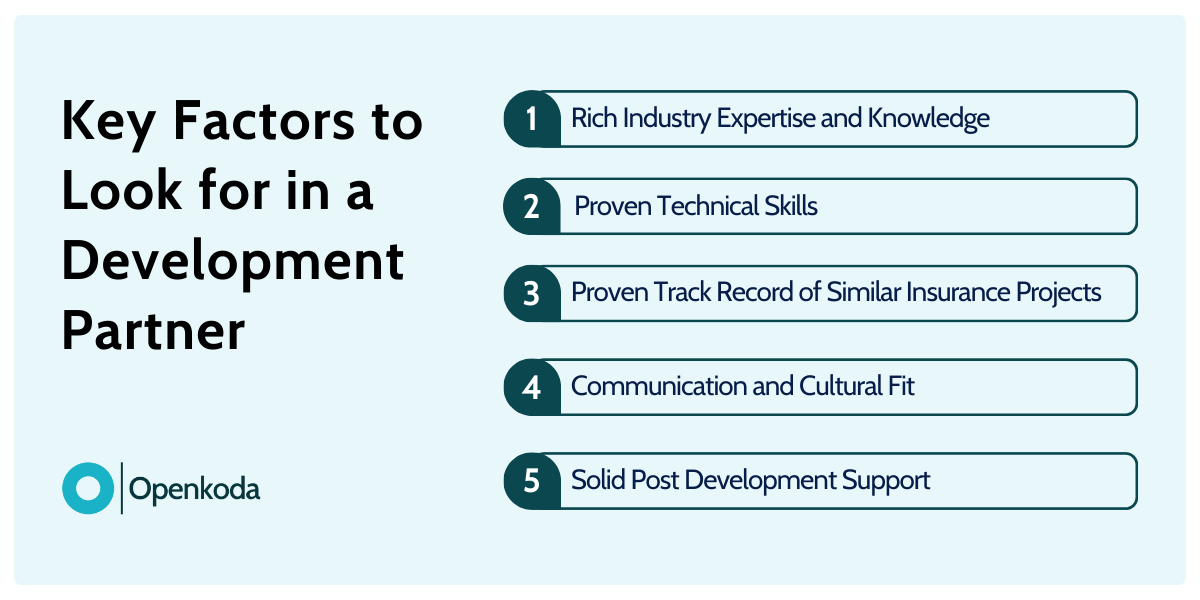
The right insurance software development company will combine technical expertise with a deep understanding of the industry.
If you have chosen your ideal custom insurance software development company, start your collaboration by establishing a clear understanding of your business needs and goals.
Begin by identifying the challenges you aim to address, such as modernizing legacy insurance systems, automating insurance processes, improving customer experiences or just staying up to date with the latest insurance industry trends.

Create a list of essential features and functionalities to effectively communicate your vision to potential partners.
Providing relevant documents, workflows, and pain points early in the process will enable the development team to design tailored solutions.
Finally, set clear expectations and milestones for the project, including a detailed scope of work and timeline.
A transparent agreement on deliverables and ongoing communication will lay the groundwork for a successful partnership.
If you're ready to explore how Openkoda can help you build custom insurance software, get in touch with us today!
Let's schedule a personalized demo to showcase our capabilities and discuss how we can address your unique needs with innovative, tailored solutions.
UK MGAs wrote about £7.2bn of premium in 2025, up a fifth. Lloyd's, the FCA, the PRA and the capital behind MGAs spent the same year deciding how much of it to trust.
Surplus lines grew 10.4% in 2025 while filings outran premium in 2026. What specialty products ask of a PAS, and five tests to run before you buy one.
Six of the best policy management software systems for 2026, split by what they actually do: insurance policy administration, or internal policy governance.
Book a live, personalized demo with our product team - tell us your use case and see the platform work with your data. No commitment.