Marine Cargo Insurance
What marine cargo insurance covers, who needs it, the main policy types (ICC A/B/C, single voyage, open cover), and key contract requirements.
What an insurance rating engine is, the must-have features to look for, the benefits of centralizing pricing logic, and how to integrate it with your stack.

An insurance rating engine is the centralized service that calculates premiums and fees based on rating rules, algorithms, and data sources.
For property and casualty insurers, the rating engine evaluates exposures, applies eligibility and modifiers, and returns a price decision to quote/bind or policy issuance workflows.
Because it's typically API-driven, the rating engine can be called from web quote forms, agent portals, PAS, and underwriting workbenches - keeping pricing consistent everywhere.
Under the hood, a rating engine combines reference tables (limits, deductibles, territory factors), actuarial formulas, and external data (e.g., geocoding, hazard scores) with product-specific rules.
Business users, not just developers, should be able to adjust factors, versions, and effective dates so pricing keeps pace with changing market conditions. This is why modern engines are packaged as configurable pricing software rather than hard-coded logic: they enhance operational efficiency by separating rating logic from application code while still integrating tightly with core systems like PAS, billing, and claims.
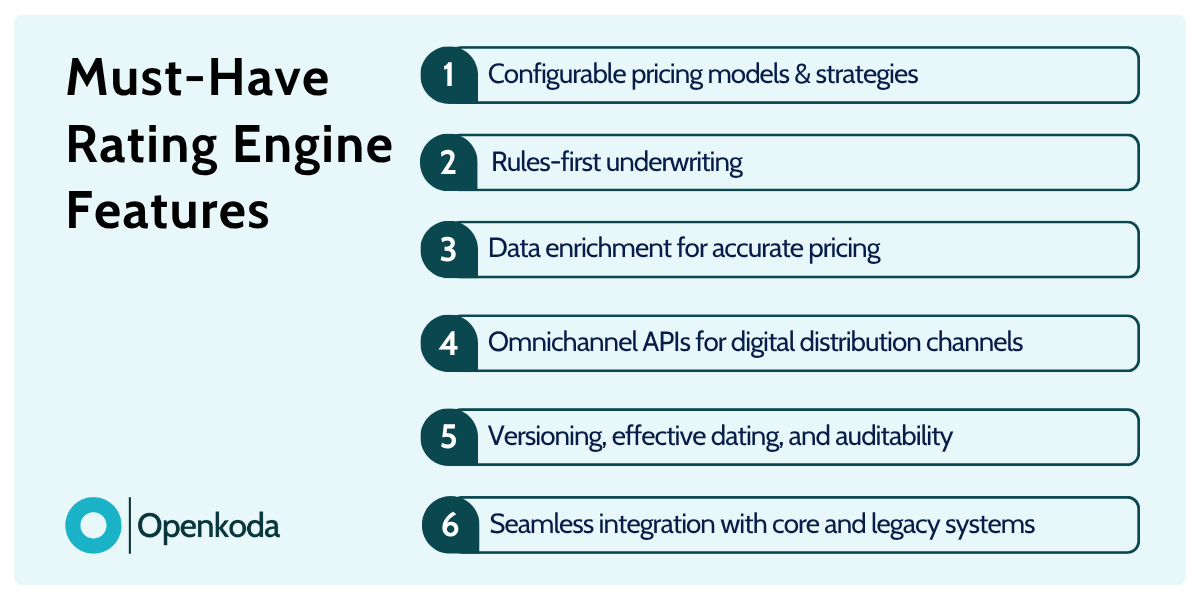
Let's focus on what to look for in a modern rating engine.
The goal is simple: support evolving pricing strategies, apply underwriting rules consistently, and return accurate pricing across every channel - without breaking your legacy systems.
Bringing pricing logic into a single insurance rating engine pays off fast. It sharpens decision-making in the casualty insurance industry, accommodates specialty insurance needs, and keeps every channel aligned. Most importantly, a centralized rating engine gives teams full control over how prices are set and changed.
A smooth integration starts where pricing meets operations: your policy administration system. Treat the insurance rating engine as a stateless, versioned service that's callable from quote, bind, and endorsement workflows.
Next, align data contracts. Define each required data point (risk attributes, territory, limits, perils) and how it's validated, enriched, and audited across channels. Decide what lives in the rating layer (calculations, eligibility) versus the policy administration layer (documents, issuance, accounting), and make those boundaries explicit.
The alternative is not to integrate at all.
Openkoda is a policy administration system with its own rating engine inside it. Rating tables, the premium calculation formula, taxes and fees, and a test calculation all sit in the product definition, versioned with the rest of the product and carrying their own effective dates. There is no separate pricing service to call and no data contract to keep two systems agreeing on what a territory code means.
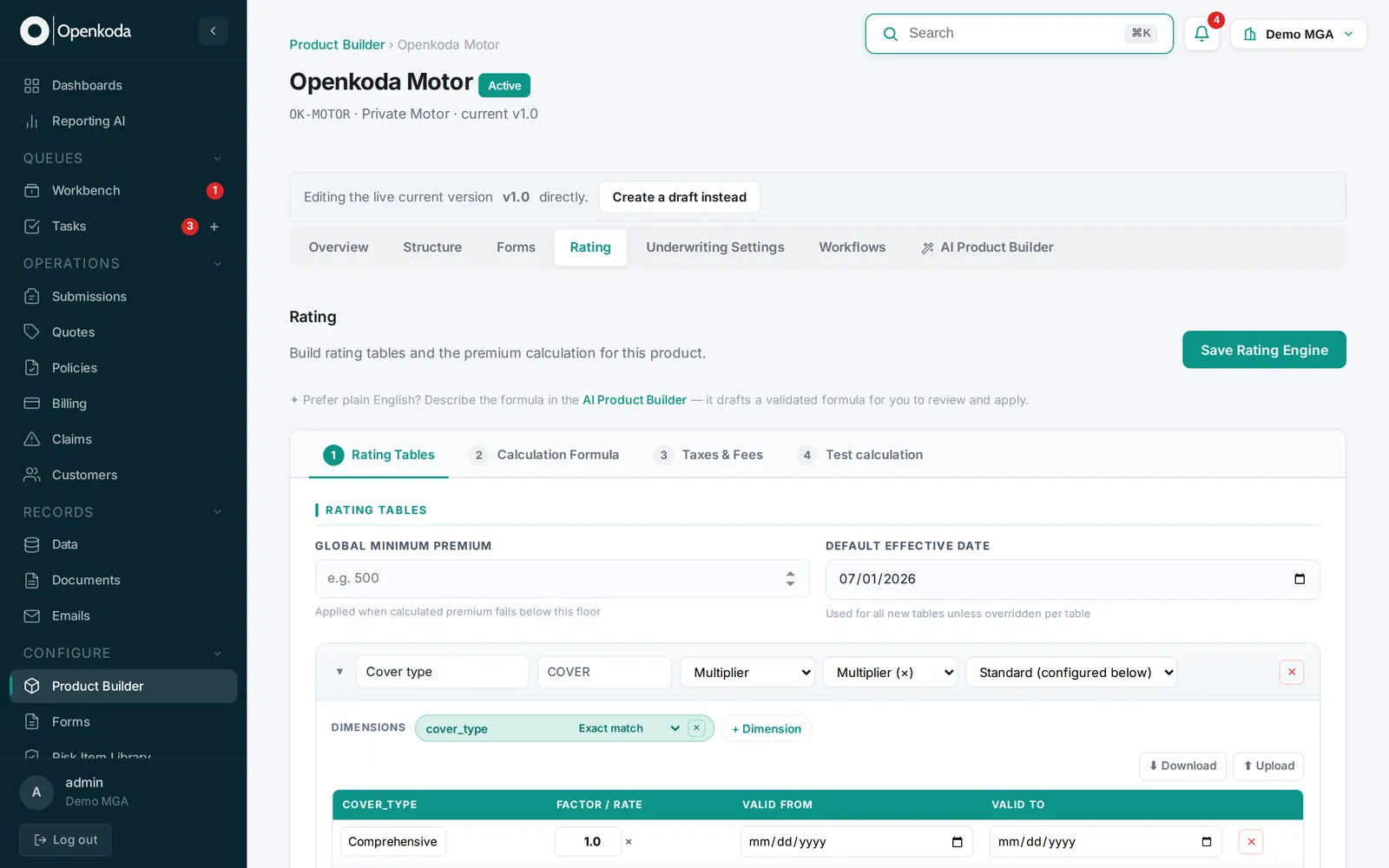
Product and actuarial teams edit the tables directly in the product builder, with live and draft versions kept apart so a rate change can be staged before it goes into force. There is a step-by-step walkthrough of setting up rating and premium calculation rules. A formula can also be described in plain English, which the AI Product Builder drafts as a validated calculation to review and apply, so changing a factor does not wait on a developer.
The trade-off is worth naming. Openkoda does not ship the decades of accumulated rating content that the established suites carry, so on a feature count against a dedicated pricing platform it does not win. What it offers instead is full code ownership on an open stack: the rating logic, the data model and the workflows around it are yours to reshape, with nobody else holding the pen on your pricing.
A modern insurance rating engine centralizes pricing logic so decisions stay consistent across channels and products.
Paired with modern technology solutions, it supports easy configuration by business users and integrates cleanly with core platforms.
This combination boosts accuracy and governance while allowing insurers to launch faster, adapt to market shifts, and stay in control.
What marine cargo insurance covers, who needs it, the main policy types (ICC A/B/C, single voyage, open cover), and key contract requirements.

An insurer owned by the businesses it covers, the forms it takes, and what separates a captive from simply retaining the risk.

What a case reserve represents, how the first estimate is set, and why it moves every time new information reaches the file.
Book a live, personalized demo with our product team - tell us your use case and see the platform work with your data. No commitment.