UK MGA Insurance Market Report 2026
UK MGAs wrote about £7.2bn of premium in 2025, up a fifth. Lloyd's, the FCA, the PRA and the capital behind MGAs spent the same year deciding how much of it to trust.
Pet insurance is scaling fast: North American premiums topped $5.2B in 2024 and the global market is projected to reach ~$79.6B by 2033.

Pet insurance is a type of specialty insurance that helps pet owners cover unexpected veterinary expenses. Policies typically reimburse for accidents, illnesses, and sometimes routine care, depending on the plan and provider.
Specialty insurance, by definition, focuses on tailored coverage for unique risks that don't fall under the traditional life, health, property, or casualty lines.
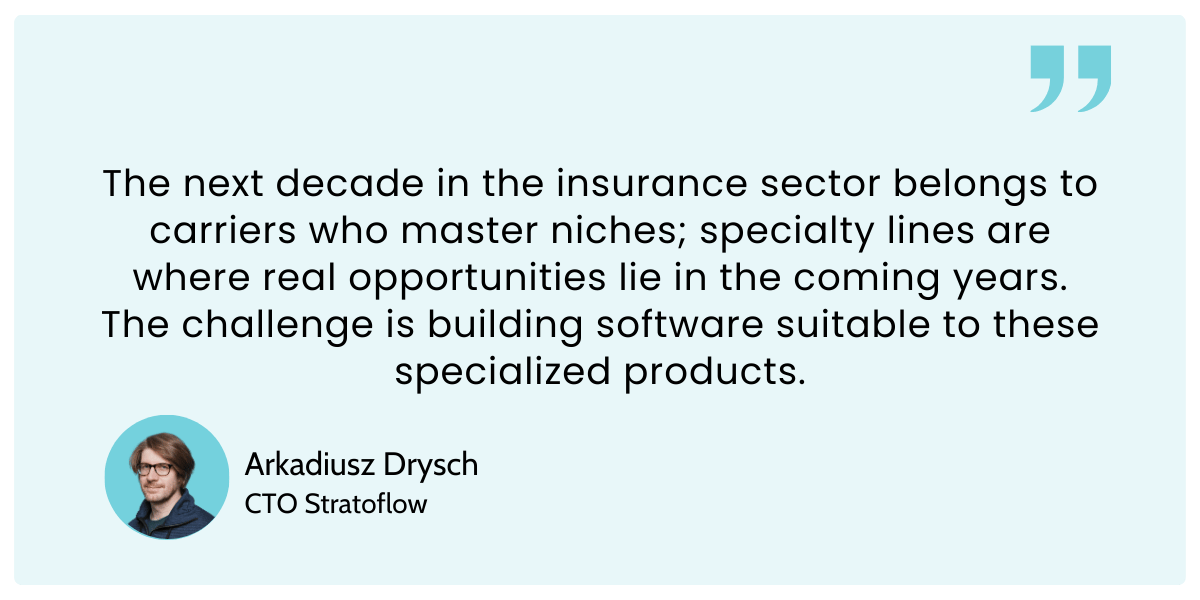
Pet insurance is a great example of this.
It responds to a very specific need – protecting the financial health of households with pets – while addressing the emotional bond people have with their animals. For many, pets are family members, and owners increasingly want the same level of healthcare access and financial protection for them as they do for themselves.
From an insurance industry perspective, pet insurance sits at the intersection of consumer demand, rising veterinary costs, and digital distribution.
Pet ownership is widespread – and growing – across regions, but the mix and intensity vary by culture, income, and urbanization. The U.S. remains a high-ownership, multi-pet market where dogs and cats dominate household counts, while Europe shows similarly high penetration but stronger insurance uptake; emerging markets are expanding fastest as rising incomes, e-commerce, and veterinary access improve.
The U.S. is one of the largest pet markets in the world, both in terms of the number of households with pets and overall spending. This makes it a central driver of demand for pet insurance.
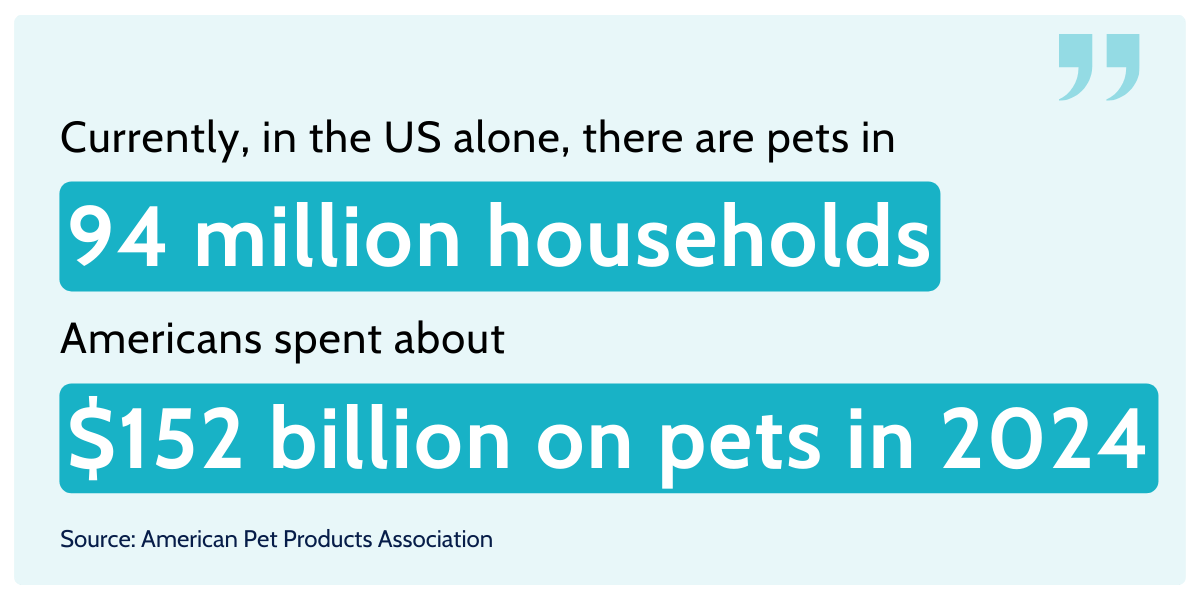
Worldwide, pet ownership is on the rise, fueled by urbanization, higher disposable incomes, and the humanization of pets.
While the U.S. is a leader, countries in Latin America, Europe, and Asia are also major contributors.
To understand who owns pets, it helps to look at generational breakdowns. These figures show which age cohorts form the largest share of pet owners in the U.S., which can inform product targeting, marketing, and underwriting strategies.
These statistics show how pet ownership breaks down by species in U.S. households.
Understanding species prevalence helps insurers tailor risk models, pricing, and product offerings.
When covering the pet insurance market it is worth exploring what kinds of insurance plans do carriers offer.
The exact problems that are covered by pet insurance depend on what type of pet insurance plan you buy.
There are generally two types of plans:
| Plan type | What it generally covers | What it generally does not cover |
|---|---|---|
| Accident & Illness |
|
|
| Accident-Only |
|
|
Across the mature pet insurance market, typical premiums cluster in a fairly tight band: in North America, the latest NAPHIA data shows average monthly accident-and-illness premiums of about $62 for dogs and $32 for cats, a practical proxy for the going rate of pet health insurance in 2026.
In the UK, where the pet insurance sector is particularly developed, the Association of British Insurers reports an average annual premium of ~£389 in 2024 - useful as a benchmark when comparing plans or budgeting.
These sticker prices sit against rising veterinary costs and robust pet insurance claims activity – ABI members paid out around £1.23 billion in 2024 alone – underscoring how even mid-tier policies can offset the financial shock of surgery or chronic-care bills.
For shoppers, that means focusing less on the headline price and more on coverage depth (accident-only vs. accident-and-illness), reimbursement levels, deductibles, and annual limits, since those levers move the premium more than any single "average."
In short, expect to pay roughly $30–$65 per month for mainstream U.S. coverage (lower for many cats, higher for older or purebred dogs), or around £389 per year in the UK – figures that help frame value when weighing today's premiums against tomorrow's potential claims.
Global pet insurance is scaling quickly – powered by humanization of pets, rising vet costs, and broader availability of digital, embedded, and employer-offered plans.
North America is posting double-digit growth off a still-low base, Europe remains the penetration leader, and long-term forecasts point to sustained expansion as awareness rises and products diversify beyond traditional accident-and-illness coverage.
U.S. pet industry expenditures nearly doubled from $66.8B in 2016 to $152B in 2024, a gain of about $85B in eight years. That translates to a ~10.8% CAGR (2016–2024) – a striking long-run expansion for a mature consumer category.
The pandemic era marked a clear inflection. Spending jumped from $103.6B in 2020 to $123.6B in 2021, reflecting both higher pet adoption/ownership and trading-up in food, treats, and veterinary care.
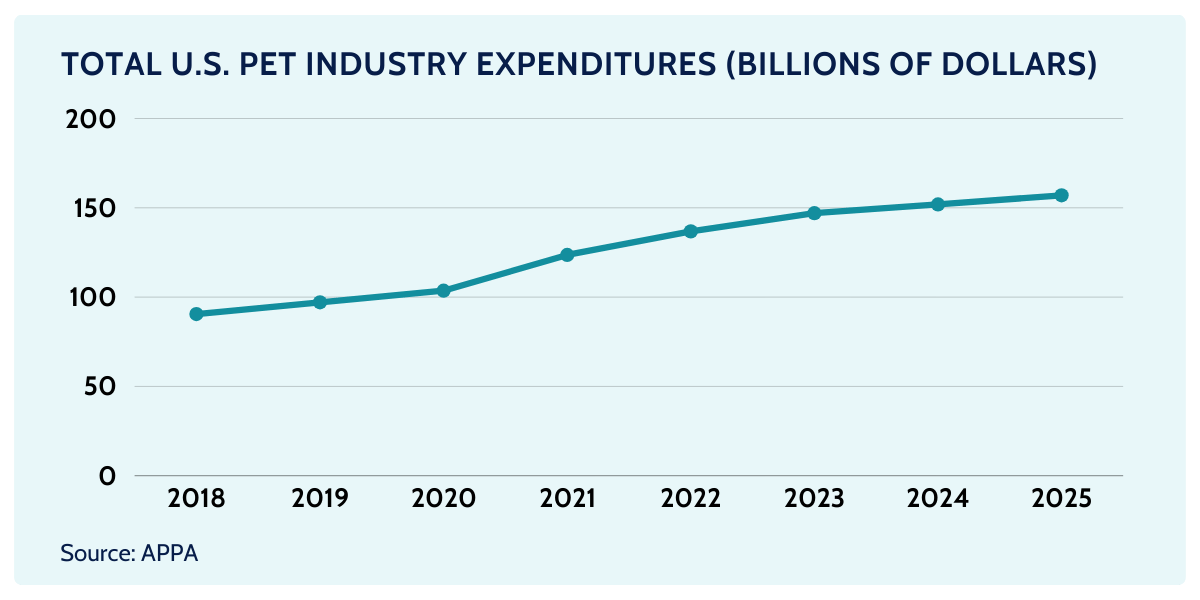
APPA reports 2024 actual at ~$152B and expects ~$157B in 2025, implying continued, moderate growth as households prioritize pet health and quality despite tighter wallets. A reasonable extrapolation from APPA's 2024–2025 trajectory suggests total U.S. pet industry expenditures could reach approximately $162.3B in 2026 (estimate).
Average U.S. pet expenditures vary a lot by species, life stage, and whether you carry insurance – but a few benchmarks anchor the range: the typical U.S. household spent about $876 on pets in 2023, while dog and cat owners commonly see four-figure annual totals once food, routine vet care, and services are added.
MetLife has compiled costs associated with veterinary care for dogs. These figures highlight the routine – but often underestimated – cost of managing frequent canine ailments over a typical 30-day treatment window.
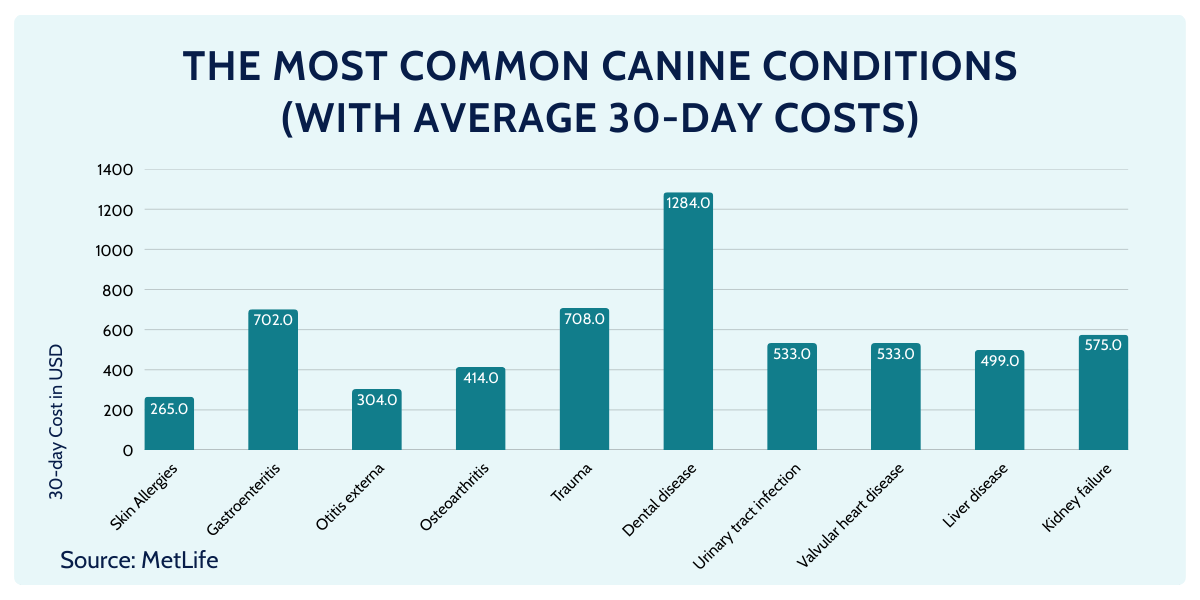
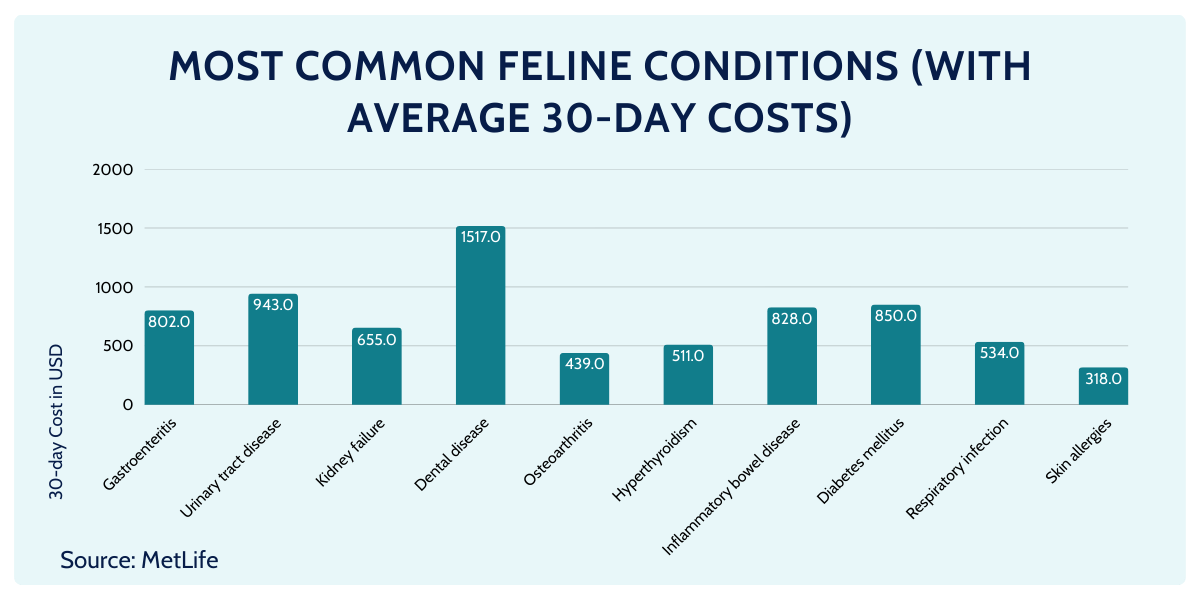
Cats face a similar blend of chronic and acute conditions, with urinary tract disease, gastrointestinal issues, and dental disease driving some of the highest short-term outlays.
The modern story begins in Scandinavia: in the late 19th and early 20th centuries Sweden experimented with animal cover, and by 1924 the first pet insurance policy issued for a dog is recorded there – often cited as the starting pistol for companion-animal policies.
In the United States, the market's defining moment came much later and much louder: in 1982, Veterinary Pet Insurance (VPI) issued the first U.S. pet insurance policy to Lassie, the famous TV collie. That single pet insurance policy issued to a cultural icon doubled as a mass-market education campaign - demonstrating how insurance could offset rising veterinary bills and legitimizing the category for veterinarians and pet owners alike.
Pet insurance is a textbook case of specialty insurance: narrowly focused coverage with unique underwriting, benefits, and servicing rules - and it's expanding far faster than mainstream P&C.
In North America, written premium hit ~$5.2B in 2024 (+20.8% YoY) with 7.03 million pets insured, while the global market is estimated at $18.6B (2024) and projected to reach ~$79.6B by 2033 (≈17.6% CAGR).

By contrast, overall insurance premium growth is in the low single digits globally, underscoring the outperformance (and complexity) of specialty niches like pet.
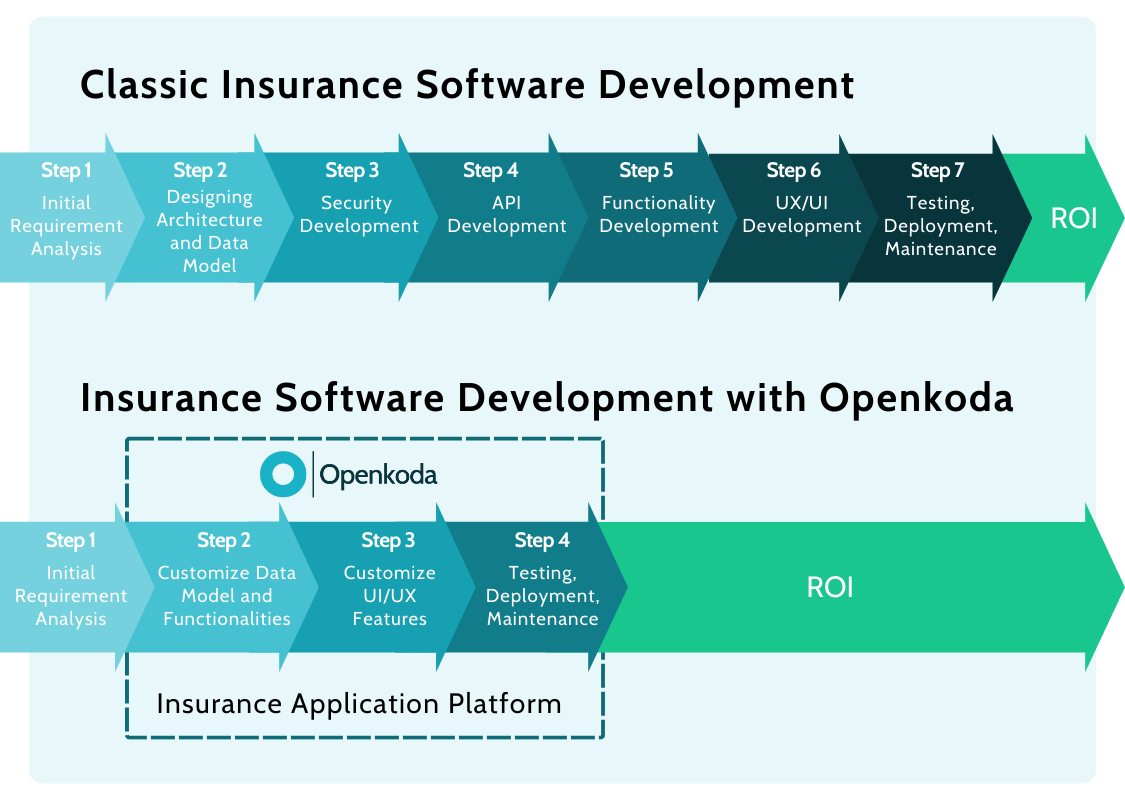
Specialty insurers need software platforms that are highly configurable, fast to iterate, and free of vendor lock-in so they can pilot micro-variants, plug in new data sources, and scale without rewriting the core.
Openkoda is a core application platform built to ship insurance products ~60% faster, with your configuration and data yours to keep and no proprietary lock-ins.
It provides pre-built templates for policy management, claims management, embedded insurance, AI reporting, and API insurance integrations so teams can stand up new products quickly, then tailor rating, forms, and workflows for each niche.
Openkoda's solid insurance application core gives pet insurance providers a tools for:
Put simply: specialty lines like pet insurance are growing much faster than the broader market, but they require agile, configurable technology.
As vet bill totals rise alongside more advanced medical procedures for pets, owners are seeking clearer protection and faster claims.
Specialty insurance – especially pet – will keep expanding, rewarding carriers that can iterate products and embed coverage where decisions happen.
With Openkoda, insurers gain the flexibility to launch and refine these offerings quickly while retaining full control over data, rules, and user experience.

UK MGAs wrote about £7.2bn of premium in 2025, up a fifth. Lloyd's, the FCA, the PRA and the capital behind MGAs spent the same year deciding how much of it to trust.

Surplus lines grew 10.4% in 2025 while filings outran premium in 2026. What specialty products ask of a PAS, and five tests to run before you buy one.

Six of the best policy management software systems for 2026, split by what they actually do: insurance policy administration, or internal policy governance.
Book a live, personalized demo with our product team - tell us your use case and see the platform work with your data. No commitment.