Guidewire Alternative: Openkoda vs. Guidewire for Policy Administration
How Openkoda, a highly customizable PAS with 12 ready modules, compares with Guidewire PolicyCenter on configuration, AI, deployment and ownership.
What a life PAS has to do over a policy that runs for decades, five systems worth shortlisting, and the three things to test before you sign.

A life insurance policy can remain in force for decades. During that time, the insurer needs to collect premiums, maintain beneficiary information, process changes, and preserve the terms under which coverage was issued.
Life insurance policy administration software helps manage those responsibilities while supporting new products and distribution channels. Choosing a system means looking closely at both sides of the business: how easily you can launch a product and how reliably you can service it over time.
This guide covers the essential features, five systems worth evaluating, and three priorities to weigh when selecting your next PAS.
A policy administration system (PAS) manages the records, rules, and transactions behind an insurance contract. Its responsibilities span applications and underwriting, policy issuance, premium collection, ongoing servicing, and claims.
For life insurers, product differences matter. Term protection, whole life, investment-linked products, and group coverage bring different calculations, relationships, and servicing requirements. A system should support the products you actually sell, including the historical rules that still apply to existing policies.
Modern PAS capabilities can also reduce everyday friction. Underwriters need complete applications and supporting evidence. Service teams need reliable policy histories. Policyholders and agents need access to documents and clear answers about coverage and payments. Connecting these activities helps teams complete work with fewer manual handoffs.
The following six feature areas provide a useful starting point for evaluating a life insurance PAS. Within each area, ask vendors to demonstrate your own products and servicing scenarios.
These five systems address different needs across individual life, annuities, specialized protection, and group benefits. Use the list to build a shortlist around your product portfolio, operating model, and target markets.
Oracle Insurance Policy Administration supports individual life, annuity, and group insurance operations. Its rules-based approach combines product configuration with underwriting, issuance, billing, policy processing, and claims. Its breadth makes it worth evaluating for insurers managing multiple product families and complex administration requirements.
Key features:
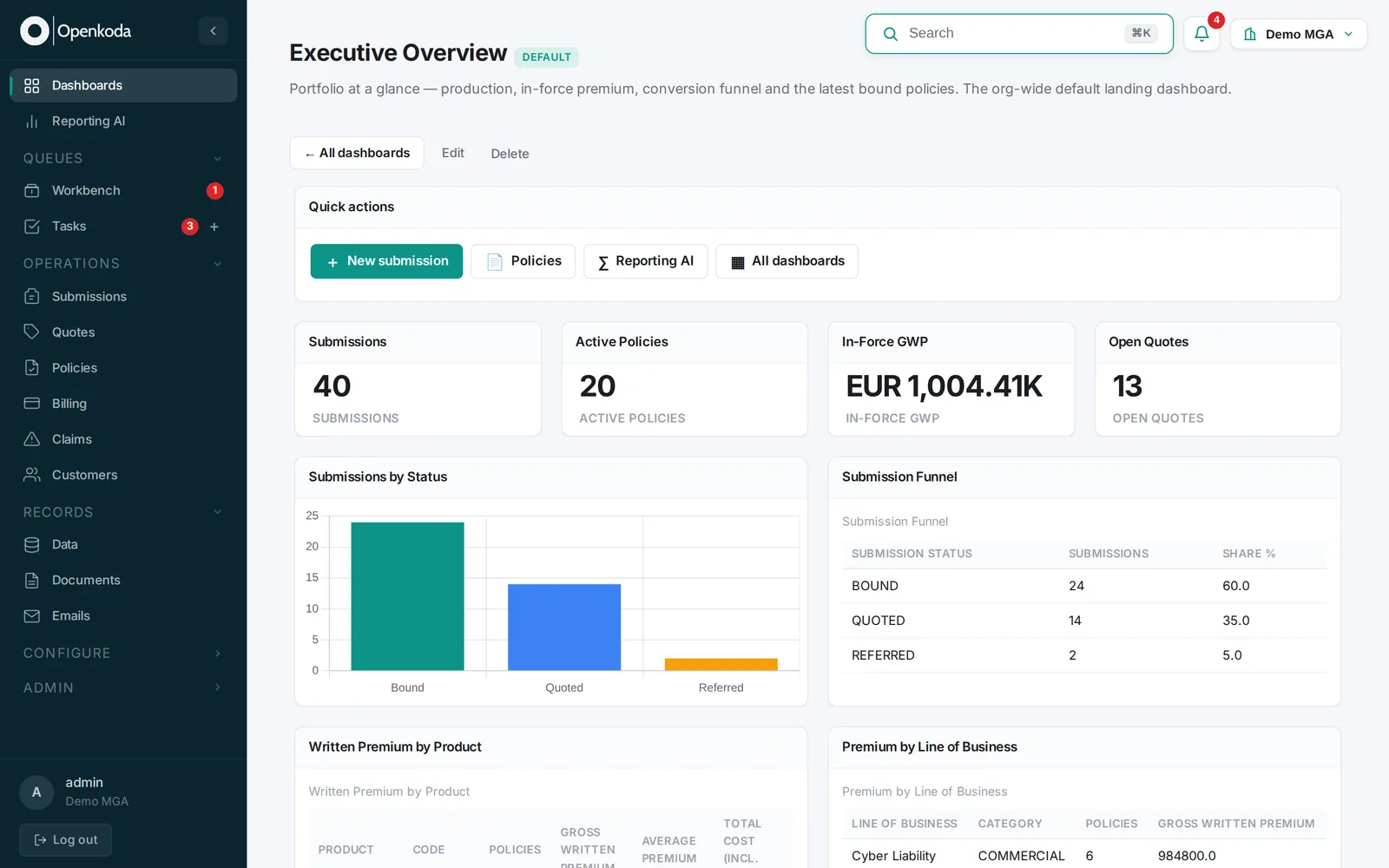
Openkoda is a highly customizable policy administration system for insurers that need to adapt products, underwriting, and servicing workflows around their business. It connects policy administration with rating, claims, billing, documents, and reporting, with visual configuration and AI assistance for product changes.
For life insurance teams, its flexibility is particularly relevant to specialized protection products and tailored underwriting processes. Openkoda’s SkyGuard case study describes a deployment supporting long-term life cover for aviation professionals, including beneficiary administration and dedicated underwriting workflows.
Key features:
AI capabilities require a separate subscription. See Openkoda AI plans and pricing.
Sapiens CoreSuite for Life & Pensions supports individual and group products across life, health, wealth, and retirement. Its combination of configurable product tools, digital services, and international capabilities makes it relevant to insurers administering varied portfolios across multiple markets.
Key features:
EIS PolicyCore is a cloud-based policy administration system serving life and annuity insurers alongside other insurance segments. Its Product Studio lets teams define reusable product components and manage versions, while lifecycle automation connects product configuration with underwriting and policy servicing.
Key features:
FINEOS Policy focuses on employee benefits, including group life and voluntary coverage. Its administration model manages both the group policy and individual members, making it particularly relevant to insurers working with employers, enrollment partners, and changing employee populations.
Key features:
Evaluate how the system handles your next product change. Ask the vendor to add a rider, revise an eligibility rule, or introduce a new underwriting question using a representative product.
Check who can make the change, how it is tested, and how existing policies retain their original terms. Also establish how custom extensions survive upgrades. Long-term flexibility depends on being able to change the system without repeatedly disrupting the business.
Look for AI capabilities attached to specific tasks: extracting application information, helping underwriters review evidence, drafting product changes, or answering operational questions.
Then examine the controls. Your team should understand what information the AI can access, how its output is checked, and who approves consequential changes. Ask to see permissions, audit records, and the handling of incomplete or incorrect results.
Include AI subscriptions, usage charges, and integration work in the evaluation. Test a real workflow and measure the result, such as time saved processing an application or preparing a report.
A convincing new-business demonstration is only part of the assessment. Your next PAS must also handle policies issued years ago, including their original terms, beneficiary changes, payment histories, and outstanding servicing work.
Use a representative sample of existing policies to test migration. Reconcile coverage, balances, dates, and historical transactions, then run servicing scenarios on the migrated records. Include difficult cases that currently require manual work.
Agree who owns data cleanup, reconciliation, testing, and the transition into production. Those responsibilities, and the cost of running old and new systems during the move, belong in the buying decision.
How Openkoda, a highly customizable PAS with 12 ready modules, compares with Guidewire PolicyCenter on configuration, AI, deployment and ownership.
A breakdown of the leading insurtech platforms in 2026, from core systems like Guidewire and Duck Creek to Openkoda, Socotra, Foliume, and HealthEdge.
Most of a bespoke insurance brief is standard policy administration. Scope the 80/20 split, start from a configurable PAS, and build only the rest.
Book a live, personalized demo with our product team - tell us your use case and see the platform work with your data. No commitment.