Insurance Rating Engine
What an insurance rating engine is, the must-have features to look for, the benefits of centralizing pricing logic, and how to integrate it with your stack.
Insurtech is the application of modern digital technologies - AI, cloud, analytics, and APIs - to modernize and transform the insurance sector.

Insurtech refers to the application of modern digital technologies to improve and transform processes within the insurance sector. The term combines "insurance" and "technology," reflecting a wave of innovation aimed at solving long-standing inefficiencies in the insurance business.
At its core, insurtech introduces new tools and platforms that help insurers operate faster, make better decisions, and deliver more tailored insurance coverage to customers. This includes technologies such as artificial intelligence, machine learning, cloud computing, big data analytics, and API-driven platforms.
Historically, many traditional insurance companies relied on fragmented legacy systems and manual workflows. These systems often slowed down processes like underwriting, claims management, and policy administration. Insurtech companies aim to modernize these operations by introducing automated workflows, better data integration, and user-friendly digital interfaces.
Today, insurtech innovation touches nearly every part of the insurance value chain. From underwriting and policy issuance to claims settlement and customer engagement, insurance technology enables insurers to operate more efficiently while improving the overall customer experience.
The importance of insurtech has grown rapidly as insurers face new market pressures, including rising customer expectations, growing data volumes, and increased competition from digital-first startups.
Digital innovation is helping insurers rethink how they design products, manage risks, and serve policyholders. In many cases, insurtech solutions allow companies to move from slow, manual processes to agile, automated operations.
Several factors explain why insurtech has become such a major force in the insurance industry:
The scale of investment also highlights the importance of insurtech. Global funding in insurtech startups has reached billions of dollars annually, with hundreds of companies worldwide working on solutions that improve the insurance value chain – from distribution and underwriting to claims management and customer engagement.
The impact of insurtech can be seen across many operational and product areas of the insurance industry. By introducing modern insurance technology, insurtech solutions help insurers streamline workflows, reduce operational friction, and improve efficiency throughout the organization.
Many insurance companies still operate complex systems that evolved over decades. These systems often struggle to keep pace with growing data volumes, regulatory changes, and customer expectations for fast, digital services. This is where insurtech plays a critical role – bringing automation, analytics, and flexible platforms that modernize core insurance operations.
Few moments define the customer experience as strongly as a claim. Historically, claims handling in the insurance industry involved paperwork, multiple approvals, and long waiting times. Insurtech solutions are changing that dynamic.
Digital claims routing platforms allow customers to submit documentation online, upload photos, and track claim status in real time. For example, in auto insurance, drivers can report accidents through mobile apps that automatically attach location data, images, and policy details.
Behind the scenes, insurance technology helps validate claims data, flag unusual patterns, and route cases to adjusters. By reducing manual steps and improving data flow, insurance companies can resolve claims faster while maintaining accurate insurance coverage assessments.
Managing policies has traditionally been one of the most system-heavy functions within the insurance industry. Policy administration systems must handle product configuration, policy issuance, renewals, endorsements, and documentation – often across multiple insurance products and distribution channels.
Modern insurtech platforms simplify this complexity. Instead of relying on rigid legacy systems, insurance companies can use configurable policy tools to launch and adjust products quickly. For instance, insurers offering auto insurance can update coverage options or policy rules without lengthy development cycles.
The same flexibility applies to emerging products such as pet insurance, where policy structures may evolve quickly as the market grows. With the help of modern insurance technology, insurers can manage policies more efficiently while ensuring consistent insurance coverage for customers.
Insurance billing systems may not be the most visible part of insurance operations, but they play a crucial role in financial stability. Insurtech platforms help modernize how insurance companies manage payments across different insurance products.
Advanced billing systems automate invoicing, payment tracking, and installment plans.
Customers purchasing everything from auto insurance to niche pet insurance, can choose flexible payment schedules and manage their accounts through digital portals.
From the insurer's perspective, this type of insurance technology greatly improves efficiency. Automated billing reduces administrative overhead while providing better visibility into premium collection and payment behavior across the entire insurance vertical.
Underwriting has always been the analytical backbone of the insurance industry. Determining risk levels and pricing policies requires careful evaluation of large volumes of data.
Today, insurtech tools are expanding what underwriters can do with that data. Modern insurance technology enables insurers to incorporate real-time information, predictive models, and advanced analytics into the underwriting process.
For instance, telematics data may support pricing decisions in auto insurance, while veterinary records or behavioral indicators can help assess risk in pet insurance. These insights allow insurance companies to tailor insurance coverage more precisely and develop smarter insurance products.
One of the most exciting areas of insurtech innovation is the development of new and niche insurance products. Advanced platforms allow insurers to experiment with coverage models and quickly launch solutions tailored to specific customer segments.
For example, insurers can introduce specialized products within unique insurance verticals, such as on-demand travel coverage, usage-based auto insurance, or flexible pet insurance policies. These products often rely on digital distribution and real-time data to deliver personalized insurance coverage.
With the support of modern insurance technology, insurance companies can develop and scale these offerings more efficiently than with traditional systems. As a result, insurtech enables insurers to respond to changing market needs and explore entirely new product categories within the broader insurance industry.
The insurtech market continues to grow rapidly as startups and technology providers bring new ideas to the insurance sector.
These companies help insurers modernize operations, use customer data more effectively, and build better digital experiences for insurance clients.
Below are some of the notable insurtech companies shaping the industry in 2026:
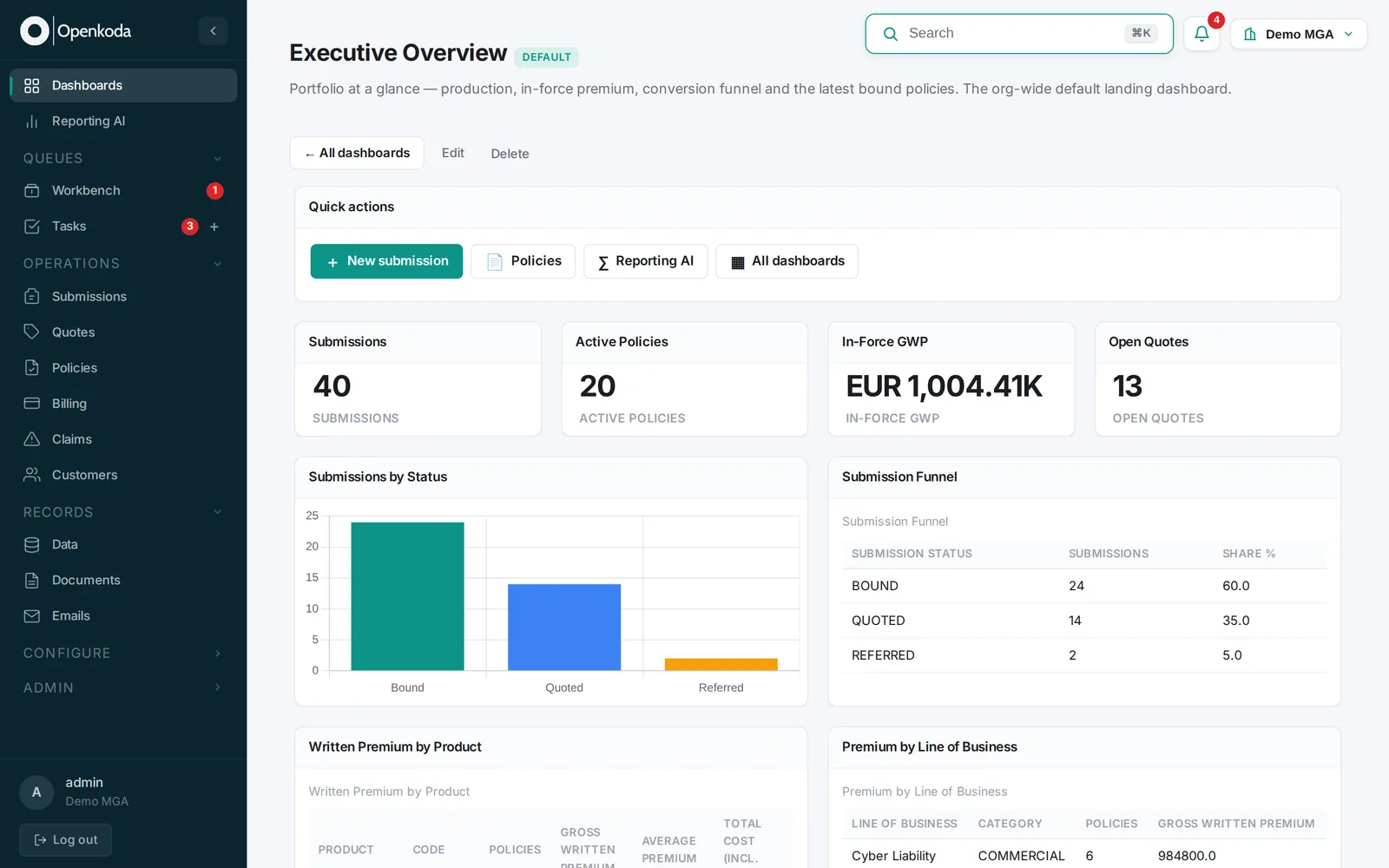
Together, these companies illustrate how insurtech innovation continues to reshape the insurance sector, enabling insurers to deliver smarter products, faster services, and more personalized experiences for modern insurance clients.

What an insurance rating engine is, the must-have features to look for, the benefits of centralizing pricing logic, and how to integrate it with your stack.

What marine cargo insurance covers, who needs it, the main policy types (ICC A/B/C, single voyage, open cover), and key contract requirements.

An insurer owned by the businesses it covers, the forms it takes, and what separates a captive from simply retaining the risk.
Book a live, personalized demo with our product team - tell us your use case and see the platform work with your data. No commitment.