Insurance Rating Engine
What an insurance rating engine is, the must-have features to look for, the benefits of centralizing pricing logic, and how to integrate it with your stack.
An insurance broker portal is a secure, multi-carrier workspace for placing and servicing policies end-to-end.

An insurance broker portal is a secure, multi-carrier workspace for placing and servicing policies.
It lets brokers submit applications, compare quotes, track status, and manage documents end-to-end. With automation and integrations, it reduces email, speeds time to bind, and improves client experience.
A broker portal is a secure online workspace where brokers get access to carrier and wholesaler systems to serve clients. It's a web app (and usually works on a mobile device) that brings quoting, renewals, and servicing into one place.
From a single account, brokers can compare plans, track applications, store user guides, contact information and other resources, and pull the tools they need – without juggling email threads or spreadsheets.
The portal also centralizes paperwork of the insurance business.
Brokers can upload or retrieve documents, download statements, and share status updates with clients in a few clicks. In short, a broker portal streamlines day-to-day insurance work so brokers spend more time advising and less time chasing data.
Brokers log in, search a client record, and start a workflow – quote, bind, endorse, or renew.
The broker portal connects to rating engines and policy administration, so eligibility, plans, pricing, and forms are current.
Role-based access ensures the right tools, documents, and statements show up for each broker, whether they're at a desk or on a mobile device.
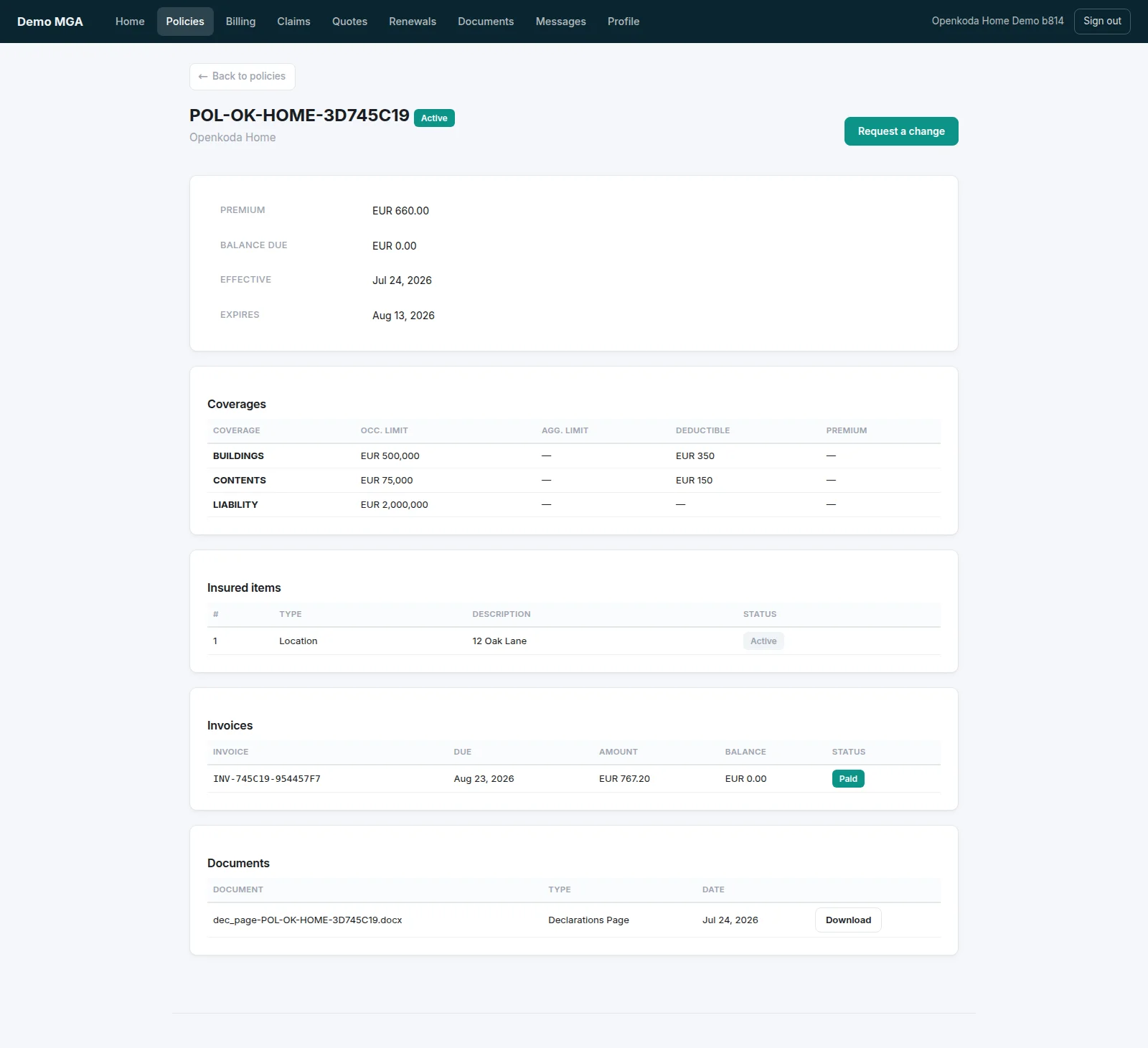
A broker portal should make daily work simple, fast, and consistent. Here are the essentials:
In an insurance business, a broker portal brings quoting, servicing, and renewals into one secure place.
It gives brokers access to real-time rates, forms, and client data, all tied to a single account.
Independent brokers, producer teams, and wholesalers use it for day-to-day work. Service reps and back-office staff also rely on the same account records for consistent handoffs. Role-based access ensures each user sees the right books, products, and actions.
Create quotes, compare plans, and move from proposal to bind.
They also use portals to update client details, upload evidence, request endorsements, generate documents, share them with clients, and have parties sign electronically – keeping every step linked to the same account.
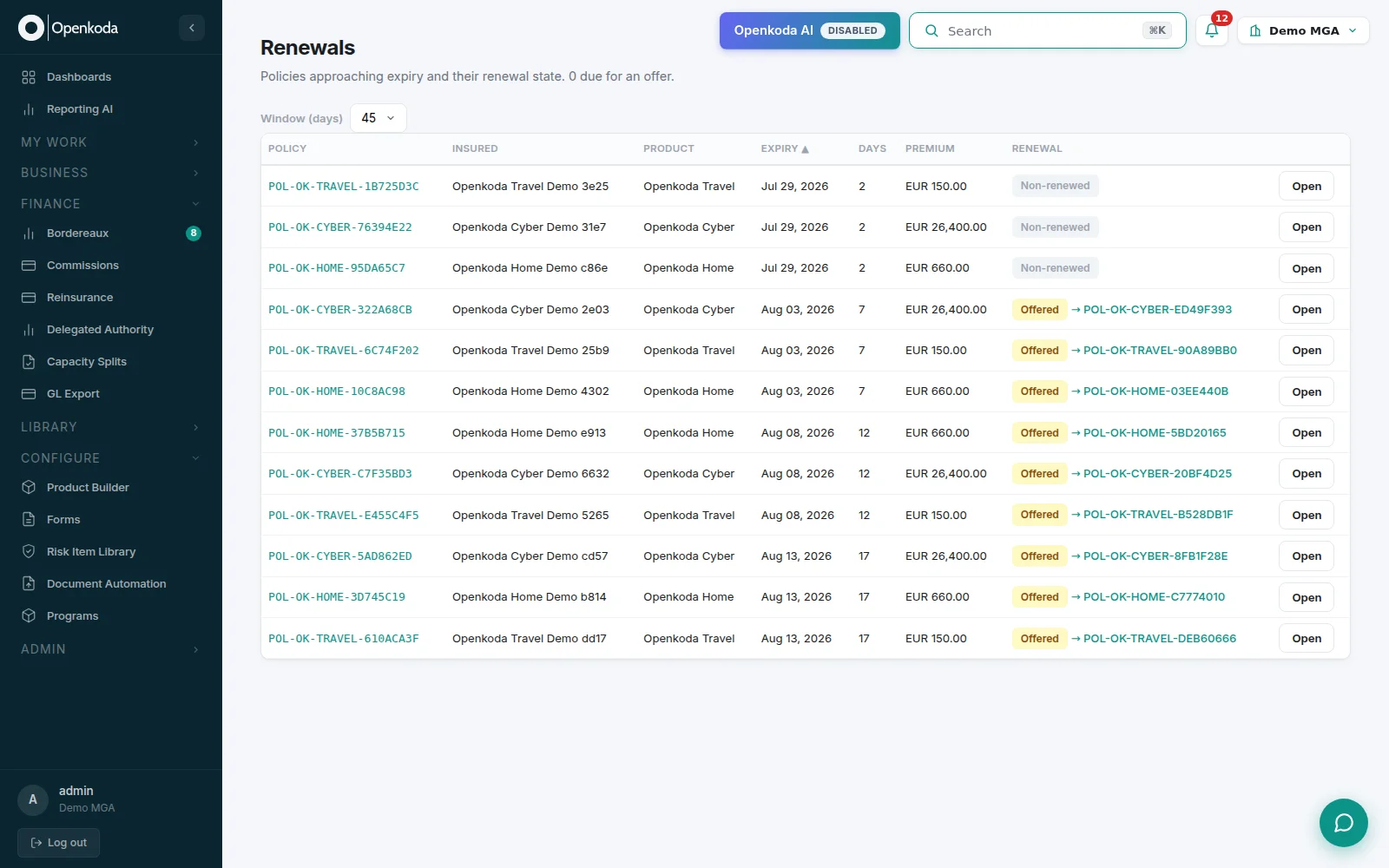
When distribution is growing, service is inconsistent, or multiple systems slow teams down. A portal provides unified access, faster cycle times, and better oversight across the insurance business, especially during product launches or market expansions.
The biggest challenge with broker portals isn't "having a portal" – it's aligning it to your specific book of business: product lines, underwriting rules, workflows, and compliance.
A portal has to mirror how your brokerage actually works, today and as it scales. That depends less on the front end than on the system sitting behind it.
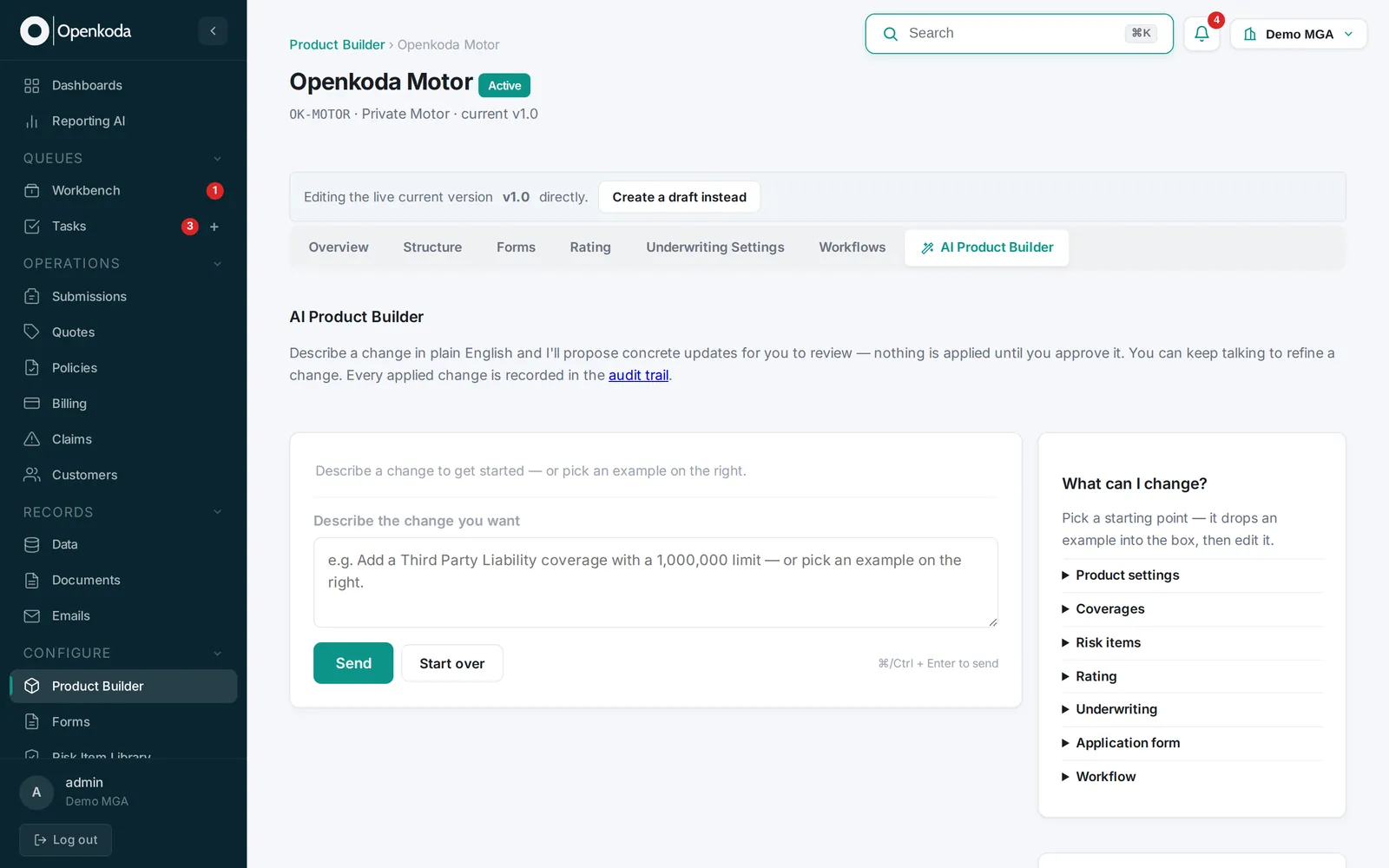
Openkoda is a policy administration system you configure rather than build. The quote-to-claim lifecycle is already there, and the data model, workflows, screens and product definitions are reshaped to your book instead of your book being reshaped to fit the platform.
For a broker portal that means the submission, quote, endorsement and renewal journeys your producers see are configuration rather than a development project, so they can change when your distribution or product mix does.
The trade-off is worth saying out loud. Openkoda does not carry the accumulated feature count of the established suites and would not win a line-by-line comparison with one. What it offers instead is customization with no ceiling, full code ownership and an open stack: you keep your configuration and your data, with unlimited users and no vendor lock-in.
What an insurance rating engine is, the must-have features to look for, the benefits of centralizing pricing logic, and how to integrate it with your stack.
What marine cargo insurance covers, who needs it, the main policy types (ICC A/B/C, single voyage, open cover), and key contract requirements.

An insurer owned by the businesses it covers, the forms it takes, and what separates a captive from simply retaining the risk.
Book a live, personalized demo with our product team - tell us your use case and see the platform work with your data. No commitment.