UK MGA Insurance Market Report 2026
UK MGAs wrote about £7.2bn of premium in 2025, up a fifth. Lloyd's, the FCA, the PRA and the capital behind MGAs spent the same year deciding how much of it to trust.
Four low-code platforms for insurance - Mendix, OutSystems, Appian and Pega - plus an honorable mention for Openkoda, a highly customizable PAS.

The insurance industry has always been cautious, but today it faces big changes.
Customers now expect faster, more personalized services, and competition from innovative startups is increasing. Insurers need to adapt quickly and find new ways to deliver products and services more efficiently.
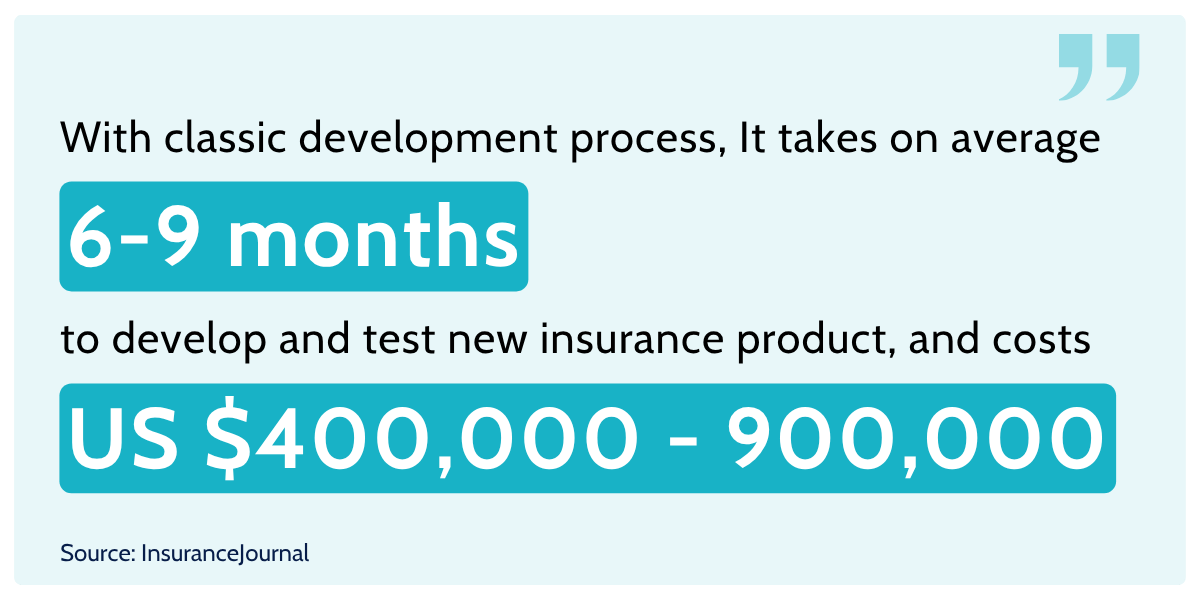
The problem is that custom software development is a notoriously expensive process that takes weeks or even months of extensive coding and testing.
When dealing with slim-thin margins like most insurers do, there's often just not much budget to work with for innovation.
But there's an alternative, more cost conscious approach – using low code insurance platform.
By adopting low code platforms, actuaries and product owners can assemble rating algorithms, underwriting rules, and omnichannel journeys through drag-and-drop elements and pre-built API connectors, turning once-painful release cycles into weekend sprints.
Because the best digital solutions are built on open standards, insurers aren't handcuffed to a single vendor's roadmap: components can be swapped for emerging AI models, third-party data sources, or even a green-field core without rewriting the entire stack.

Mendix is a low-code platform known for improving the efficiency of insurance software development processes in the insurance sector.
Its strength lies in its ability to smoothly integrate with existing legacy insurance systems.
Mendix simplifies the complexities of insurance processes, allowing business users to accelerate underwriting and policy management tasks for improved internal processes as well as enhanced customer satisfaction.

OutSystems is a highly user-friendly low-code platform headquartered in Boston, Massachusetts.
It excels at providing intuitive interfaces and tools that enable even non-technical users to build dependable applications easily.
With a strong focus on user experience, OutSystems is ideal for insurance companies looking to quickly scale their solutions without sacrificing quality or usability.

Appian offers a mature low-code platform specializing in workflow automation and real-time data analytics.
It is especially suited for complex insurance operations requiring precision, speed, and reliable data insights.
Appian streamlines operations of the insurance business, reduces manual work, and enables faster decision-making.

Pega is a versatile low-code platform highly valued by insurers aiming for exceptional customer relationship management and intelligent automation.
Its platform provides advanced tools for automating customer interactions and improving overall client experience.
Pega is well-suited for companies wanting comprehensive, intelligent automation solutions for enhancing business processes.
For insurers exploring low-code platforms, the underlying goal is often the same: launch faster, automate daily work, and adapt software to their business. Openkoda deserves a separate mention because it approaches that goal as a highly customizable policy administration system (PAS).
Openkoda is not a general-purpose low-code development platform. It comes with a ready-made feature set for core insurance processes, including policy management, underwriting, claims processing, billing, document generation, and reporting. These modules work together to support an insurer’s day-to-day operations.

That ready-made functionality leaves plenty of room for customization. Insurers can shape products, pricing rules, forms, dashboards, and workflows around their requirements. A straightforward claim can follow an automated route, while a complex case moves through additional reviews and approvals.
For a defined initial scope, insurers can move from concept to production in around three weeks, with the timeline depending on integrations, data migration, and customization requirements. The same system can then evolve as the business introduces new products, distribution channels, and processes.
If you want to quickly develop innovative insurance products, improve operational efficiency or just move away from your outdated tech stack, a low code platform might be the optimal path for your business.
Don't let competitors set the pace while you wrestle with code debt; start launching the insurance products of tomorrow, on an open foundation that keeps your architecture, and your strategic options, firmly under your control.
Three checks separate a demo that impresses from a platform that survives contact with your book.
Test it on your hardest product, not your simplest. A build shown around a single-peril personal line tells you nothing about a binder with three capacity providers, or a product whose rating changes mid-term. Hand the vendor your worst case and watch who has to get involved to make it work.
Find out where configuration stops and code starts. Every low-code platform has a ceiling. Establish where yours sits for the things you actually need, who is allowed to cross it, and whether what gets built beyond it survives the vendor's next upgrade.
Price the second year, not the first. Licence models differ sharply: per user, per application, per case, per environment. Model the cost at today's volume, then again with a new product, an extra distribution partner and a catastrophe-driven spike in activity.
A low-code platform earns its place when the constraint is delivery capacity rather than insurance functionality. If what you need is policy, underwriting and claims working on day one, a configurable insurance system will get you there sooner.

UK MGAs wrote about £7.2bn of premium in 2025, up a fifth. Lloyd's, the FCA, the PRA and the capital behind MGAs spent the same year deciding how much of it to trust.

Surplus lines grew 10.4% in 2025 while filings outran premium in 2026. What specialty products ask of a PAS, and five tests to run before you buy one.
Six of the best policy management software systems for 2026, split by what they actually do: insurance policy administration, or internal policy governance.
Book a live, personalized demo with our product team - tell us your use case and see the platform work with your data. No commitment.