UK MGA Insurance Market Report 2026
UK MGAs wrote about £7.2bn of premium in 2025, up a fifth. Lloyd's, the FCA, the PRA and the capital behind MGAs spent the same year deciding how much of it to trust.
A look at embedded insurance, the main software types, and the top five embedded insurance providers to know in 2025.

Embedded Insurance is an innovative approach that seamlessly integrates insurance coverage into the purchase of products or services with embedded insurance forms, enhancing the existing customer journey and providing a unique value proposition to users at checkout.
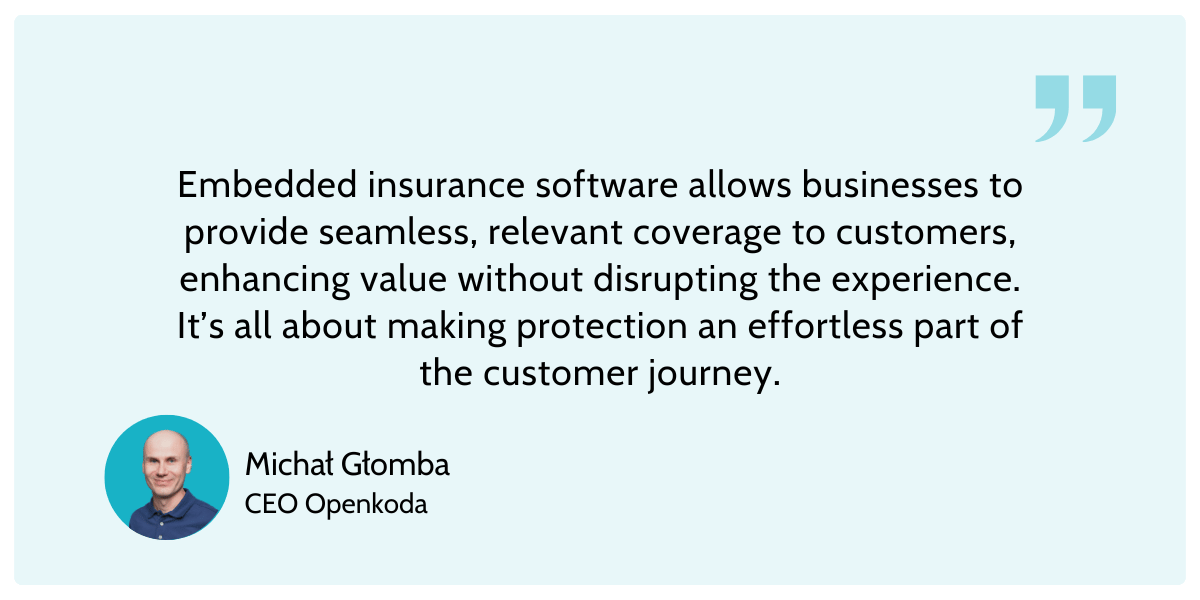
How does it work in practice?
For example, when a customer purchases a new smartphone, they can be offered device protection or extended warranty insurance as part of the checkout process. This integration makes the insurance purchase feel like a natural part of the product purchase, rather than an afterthought.
This innovative way of simplifying the insurance value chain is rapidly gaining traction.
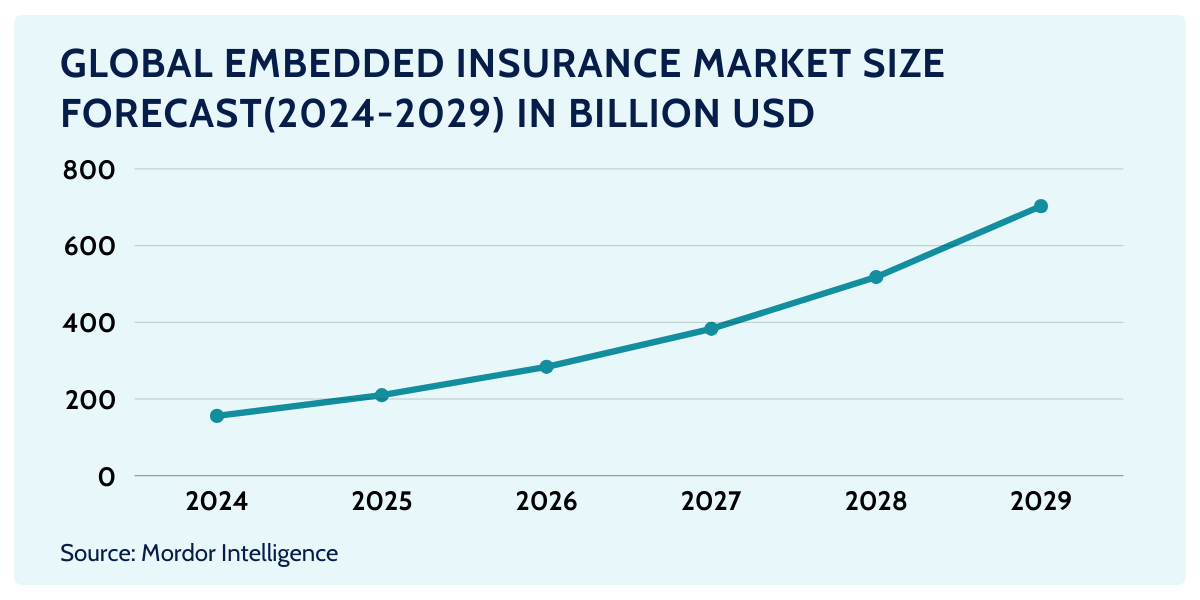
The market is expected to reach over $150 billion by 2024 and grow to $700 billion by 2029, with a compound annual growth rate (CAGR) of over 30%.
As you may have guessed, this rapid growth is being driven by the convenience and relevance that embedded insurance offers, which has resonated strongly with consumers, but also by the increasing role of younger generations such as Millennials and Gen Z.
As noted in Aperture's Embedded Insurance 2.0 report, more than $5 trillion could be distributed globally by non-insurance companies through embedded capabilities in less than 10 years, representing 16% of projected global insurance spend – up from just 1% in 2022.
That's why many companies are increasingly investing in embedded insurance software as a critical component of their digital transformation strategies, and yours should, too.
As the market continues to evolve, the right embedded insurance software can ensure your company is well-positioned to capitalize on new opportunities and deliver differentiated services that meet modern customer expectations.
Embedded insurance software comes in several forms, each tailored to seamlessly integrate insurance products into other ecosystems such as e-commerce, travel booking systems, financial services, and more.
Here are the main types:
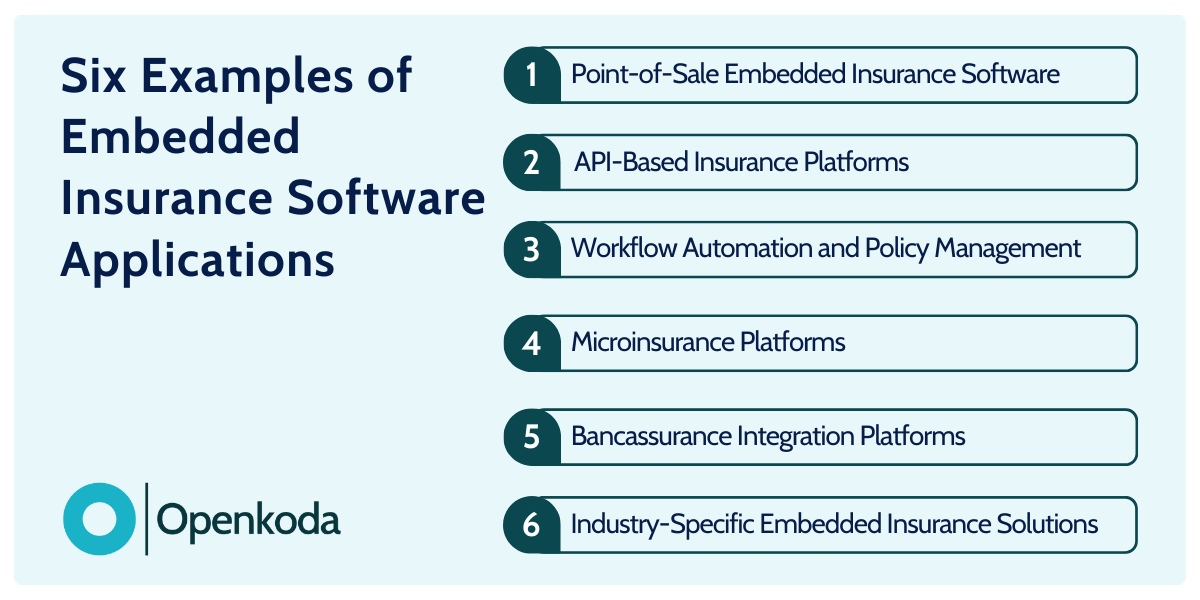
With various embedded insurance products on the market, it's good to familiarize yourself with the most popular options to make the most informed decision about what to choose for your business.
Let's take a closer look at five of the most popular and influential embedded insurance applications and products providers in 2025:

Openkoda is an insurance platform designed for faster insurance application development.
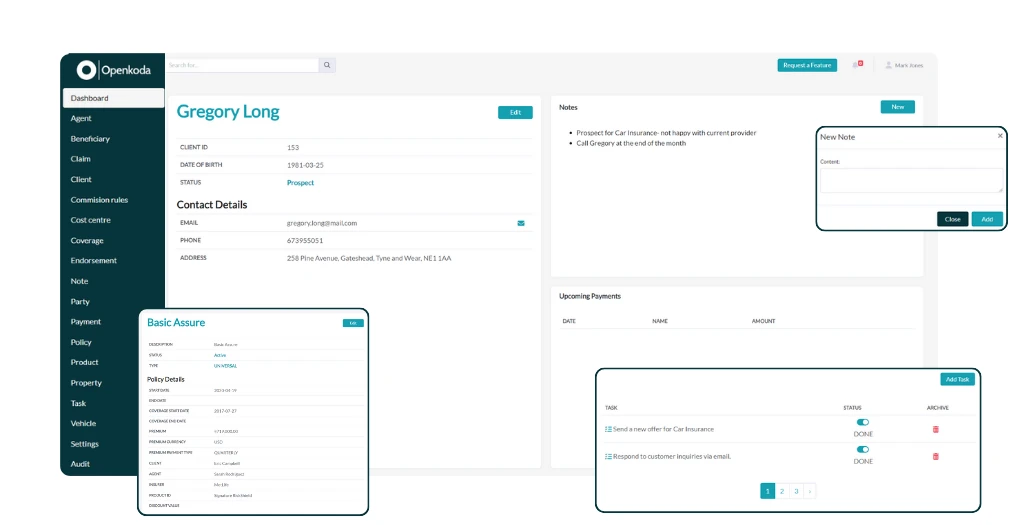
With Openkoda, building a custom embedded insurance system becomes much faster, reducing development time and costs by 60% and enabling faster time to market.
The platform provides all core functionality from the start, eliminating the need to start from scratch, and the system can be easily extended and customized without limitations (no proprietary programming languages).
The system allows you to create various plugins for a range of digital platforms, including e-commerce product insurance, travel insurance, mobility and finance.
Your configuration and data stay yours and export cleanly, so there is no vendor lock-in.
The code is entirely yours, with no proprietary language restrictions, giving you the freedom to choose your own hosting solution or use Openkoda's managed cloud services.

Cover Genius is a leading embedded insurance provider focused on delivering customized insurance solutions through a variety of digital platforms.
The company partners with businesses in industries such as retail, travel and financial services, enabling them to offer insurance directly to customers at the point of sale.
Known for its global reach, Cover Genius operates in over 60 countries, delivering localized, compliant insurance products that enhance the customer experience by providing seamless and relevant coverage options.

Qover is a major player in the embedded insurance market, providing flexible, scalable solutions for companies looking to integrate insurance into their customer journeys.
Headquartered in Belgium, Qover partners with a wide range of industries, including fintech, automotive and gig economy platforms, enabling them to offer customized insurance products directly through their platforms.
The company's API-driven platform enables seamless integration for insurance distributors, providing coverage in multiple countries while ensuring compliance with local regulations.

Tigerlab is an innovative insurance software provider that delivers end-to-end, cloud-based solutions for insurers, brokers, and managing general agents (MGAs).
Its flexible, API-driven platform enables companies to manage the entire insurance lifecycle, from policy issuance to claims processing, all within a customizable, scalable system.
Tigerlab's software is designed to seamlessly integrate embedded insurance offerings, allowing partners to offer customized insurance fueling digital transformation in insurance industry.

Bsurance is a digital insurance provider specializing in customizable embedded insurance solutions for businesses.
Through its cloud-based platform, Bsurance connects insurers with various partners, enabling the seamless integration of insurance products directly at the point of sale, improving both profit margins and customer satisfaction.
The company serves a wide range of industries, including retail, financial services and mobility, providing real-time, personalized insurance coverage to end users.
Embedded insurance offers significant financial and strategic benefits that go far beyond improving the customer experience.
In the UK, embedded insurance partnerships can reduce customer acquisition costs by 75%, from £200 to £50 per customer.

This cost reduction results from streamlining the sales process by embedding insurance directly into the product, eliminating the need for costly advertising campaigns.
In addition, embedded insurance has been shown to increase purchase intent by 25%, increasing sales and adding value to the original product.
If you are looking for ways to unlock the potential of embedded insurance, Openkoda offers a clean alternative for developing and deploying insurance software quickly and efficiently.

UK MGAs wrote about £7.2bn of premium in 2025, up a fifth. Lloyd's, the FCA, the PRA and the capital behind MGAs spent the same year deciding how much of it to trust.

Surplus lines grew 10.4% in 2025 while filings outran premium in 2026. What specialty products ask of a PAS, and five tests to run before you buy one.
Six of the best policy management software systems for 2026, split by what they actually do: insurance policy administration, or internal policy governance.
Book a live, personalized demo with our product team - tell us your use case and see the platform work with your data. No commitment.