
Policy Administration System (PAS)
A policy administration system is one of the core platforms that keeps an insurer’s day-to-day business moving.
It supports the full policy lifecycle, from policy issuance and endorsements to renewals, billing, and document handling. In a market shaped by rising customer expectations and changing market demands, having the right system is no longer just helpful. It is foundational.
Policy Administration System – General Definition
A policy administration system is software designed to manage the creation, maintenance, and servicing of insurance policies throughout their entire lifecycle.
In practice, it helps insurers handle everything connected with a policy, including quoting support, policy issuance, renewals, cancellations, endorsements, billing links, and reporting. It is often the digital backbone of an insurer’s core insurance operations.
An insurance policy administration system gives teams a central environment where workflows, rules, and policy data can be managed in a more structured and reliable way. Instead of relying on disconnected tools, spreadsheets, or highly manual processes, insurers can work within one platform that supports consistency and speed. This is especially important when carriers manage multiple insurance products, distribution channels, and regulatory requirements.
Key thing to remember is that a modern policy administration system also does much more than basic recordkeeping.
It can support automation, integrate with claims, billing, CRM, and underwriting tools, and improve how teams access and use policy data.
In other words you can think of a modern PAS as an engine for better service, stronger control, and greater operational efficiency across the business.
Key Features of Policy Administration Software
At its core, insurance policy management software should help insurers manage policies accurately, quickly, and at scale. The exact feature set will vary depending on business model and product complexity, but the most valuable platforms usually include the following:
- Policy lifecycle management: A strong policy administration system supports the full journey of a policy, from creation and policy issuance to renewals, mid-term changes, reinstatements, and cancellations. This helps insurers reduce manual work and maintain consistency throughout the process.
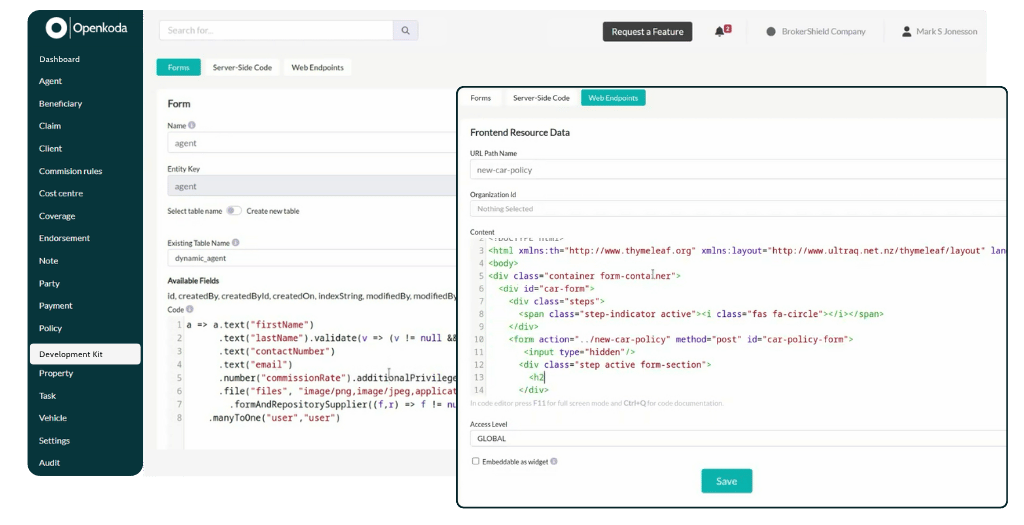
- Product configuration and flexibility: A good insurance policy administration system allows teams to configure and update different insurance products without excessive dependency on hard-coded changes. That flexibility matters when insurers need to launch new offerings faster or adapt existing ones.
- Workflow automation: Automation is one of the biggest strengths of a modern policy administration system. It can route tasks, trigger approvals, generate notifications, and reduce repetitive administrative work, helping insurers improve operational efficiency in a measurable way.
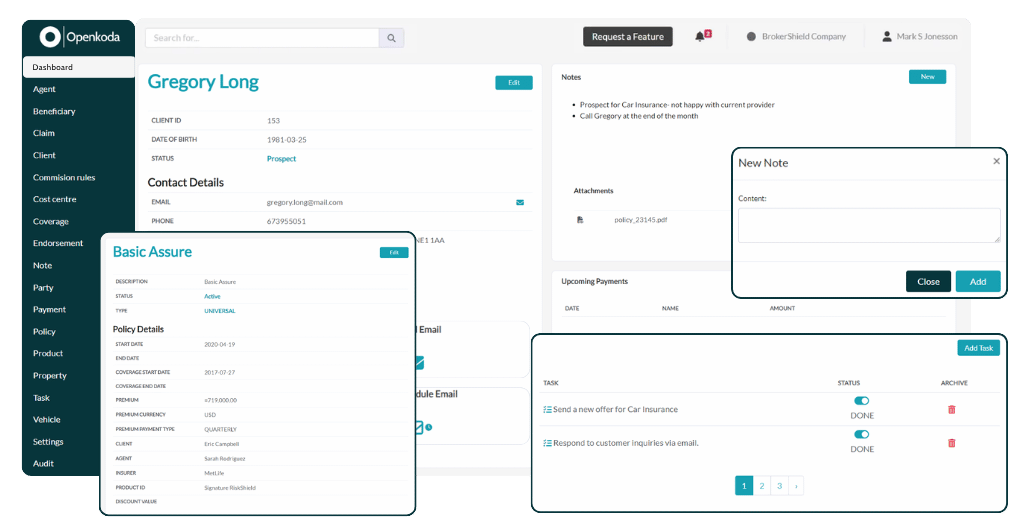
- Document management: Built-in document management capabilities make it easier to create, store, retrieve, and manage policy documents, endorsements, certificates, and customer communications. This improves control and reduces delays caused by scattered files and manual handling.
- Data centralization and reporting: A robust policy administration system centralizes policy records and makes reporting easier. This gives insurers better visibility into performance, portfolio structure, and servicing activity, while also supporting more informed decisions.
- Integration capabilities: The best policy administration software connect with claims, billing, underwriting engines, CRMs, and external data providers. That is essential if the goal is to streamline insurance operations rather than create another isolated system.
- User and customer support tools: Some PAS solutions also include portals, service dashboards, and self-service functions that make life easier for both staff and policyholders. These features can directly strengthen the overall customer experience.
Benefits of Insurance Policy Administration Systems
A modern policy management system does more than digitize policy handling. It helps insurers work smarter, respond faster, and build stronger service models. The key benefits are both operational and strategic.
Better Operational Efficiency
One of the clearest advantages of an insurance policy administration system is improved speed and consistency. By reducing manual steps, automating workflows, and centralizing information, insurers can increase operational efficiency across teams. This also helps reduce errors, lower rework, and shorten turnaround times.
Just as importantly, a well-designed platform can help streamline insurance operations across underwriting support, servicing, renewals, and administration. For insurers trying to scale without adding unnecessary complexity, that matters a lot.
Lower Operational Costs
Manual processing is expensive.
So are fragmented legacy environments, duplicated tasks, and slow internal handoffs.
A capable policy admin system helps insurers reduce operational costs by automating routine work, simplifying administration, and making better use of internal resources.
Over time, the impact becomes visible not only in lower servicing effort, but also in faster onboarding, better compliance support, and less dependence on workaround-heavy processes. For many carriers, the business case starts here.
Stronger Customer Satisfaction
Customers may never see the backend platform, but they absolutely feel its impact. Faster service, cleaner documents, fewer mistakes, and more responsive communication all contribute to higher customer satisfaction. A modern policy administration system supports that by making policy servicing smoother and more reliable.
This is where technology becomes customer-facing in a very real sense. Better internal processes lead to a better customer experience, and that is increasingly important in the insurance industry, where speed and convenience now shape buying and retention decisions.
Choosing the Right Policy Administration System
Choosing a policy administration system is not just a technology decision. It is a business decision that affects product agility, service quality, process scalability, and long-term transformation. The right platform should match both current needs and future ambitions.
Some insurers need a highly configurable solution for complex commercial lines. Others may prioritize speed, simplicity, and faster deployment for more standardized products. In every case, the goal should be the same: select a policy admin system that supports growth, reduces friction, and keeps the business ready for change.
When evaluating options, it helps to focus on a few practical areas:
- Product configurability: The system should support your product structure and allow changes without excessive development effort. This is especially important for insurers responding to new regulations or shifting market demands.
- Ease of integration: A PAS should work well with the rest of your ecosystem, including claims, billing, CRM, and external services. Strong integration is essential for enabling insurers to operate more smoothly across departments.
- Automation and usability: Look for software that helps improve operational efficiency through workflow automation, task management, and intuitive interfaces. A technically strong system still needs to be usable by business teams.
- Scalability and vendor fit: Consider whether the platform can support future growth, additional lines of business, and evolving service models. The right life insurance policy administration system should not only solve today’s problems, but also remain valuable as your business changes.
In the end, the best policy administration system is one that fits the realities of your business while creating room for improvement.
It should support teams internally, strengthen service externally, and give insurers the tools they need to manage policies with more control and less friction.
And if customizability is your top priority, it is worth looking at Openkoda and its production-ready policy administration module. It can be a strong option for insurers that want a flexible foundation they can adapt to their specific processes, products, and growth plans.
&p[summary]=Learn what a policy administration system is, which features matter most, and how it helps insurers improve efficiency)
